

Methodological Challenge! How would you approach the following situation?
A chemical company produces a product using two chemically equivalent feedstocks with different impacts. Let’s call them “F” and “low carbon F”.
Both arrive at the factory and get mixed in a tank. And both are used in the same production line to produce the same product.…Read More2 Comments
I completely concur with Lise Laurin’s reply. I encounter this quite often, very recently in the area of SAF (Sustainable Aviation Fuel) and LCAF (Low Carbon Aviation Fuel) when I was working with PETRONAS. In the aviation fuel industry, this concept of separation is called “Book and Claim” (Ref:
Book and Claim – RSBhttps://rsb.org › book-claim)
Dear all,
Me and some colleagues are hosting a session during the next SETAC Europe conference in Dublin (30 April-4 May) on Communicating Nature-Positive Outcomes (session 6.05). We’re very interested in your contributions! Also have a look at the other sessions. Deadline 30th of…Read More liked thisPhilip Strothmann is
 feeling Happy
Dear all, I’m happy to share with you that our Annual Report for 2021 is now online. If you’d like to learn a bit more about what the FSLCI did last year, you can check out the report now here: https://fslci.org/annual-report-2021/
Philip Strothmann is
feeling ExcitedDear all, I’m happy to let you know that Ananda Sekar (Sabic) will join Martina Prox (iPoint Systems) next week to start the conversation around LCA & Digitalization during our upcoming Innovation X Change on the 26h of October at 5pm CEST. The event is part of our open table conversation series and open to all members free of charge. More…Read More
The CIRAIG is unveiling its new brand identity today! 🎉
Combining modernity and dynamism, this new image corresponds to the current momentum of the organization and the major changes underway and to come.
Created by Gaël Dorgère, this new brand identity is already visible on our website which was designed by Drea Gideon.
liked this2 Comments-
Looks great, congratulations 🙂
-
very dynamic and slick! looks really cool 🙂
- Load More Posts





 feeling Happy
 feeling Excited



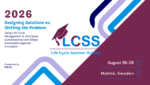
- Call for Applications: Life Cycle Summer School 2026
 Apply now and join our Life Cycle Summer School at the end of August in Malmö, Sweden! Apply before the end of May and secure the Early Bird rate.
 - Call for Abstracts: LCIS 2026 – India’s First Life Cycle Insights for Sustainability Conference
 Submit your abstract now for the 1st Indian Conference on Life Cycle Insights for Sustainability. Deadline for Submissions is the end of May!
 - LCIC 2026 Early Bird Tickets now available!
 Tickets for the LCIC 2026 are now available! Get your Early Bird Tickets now and join us in July! Physical tickets are limited; secure your place now!












Great question, Pia! If the company treats “low carbon F” like a power purchase agreement, in other words, any extra cost for the low carbon product are accounted to the low carbon P, this could be an acceptable assessment. However, the company must do clear accounting so that they don’t sell more low carbon P than can be produced using the low…Read More