Improving the circularity of textiles by preserving functionality – insights from a resource effectiveness perspective
Session 15: Applying Systems Thinking to guide the transition towards a regenerative Circular Economy (1)
The production of clothing is a 1,100 billion EUR industry that consumes 98 million tons of non-renewable resources, is responsible for 20% of the global industrial water pollution, and emits more CO2-eq. than all international...
Innovation ability in producing active multi-layer films for Bag in Box wine packaging: An environmental approach
Over the past 20 years, the international trade of wine increases 80% by volume and more than 114% by value (OIV, 2021). This growth led to industries looking for better packaging practices. In 2020, bottled...
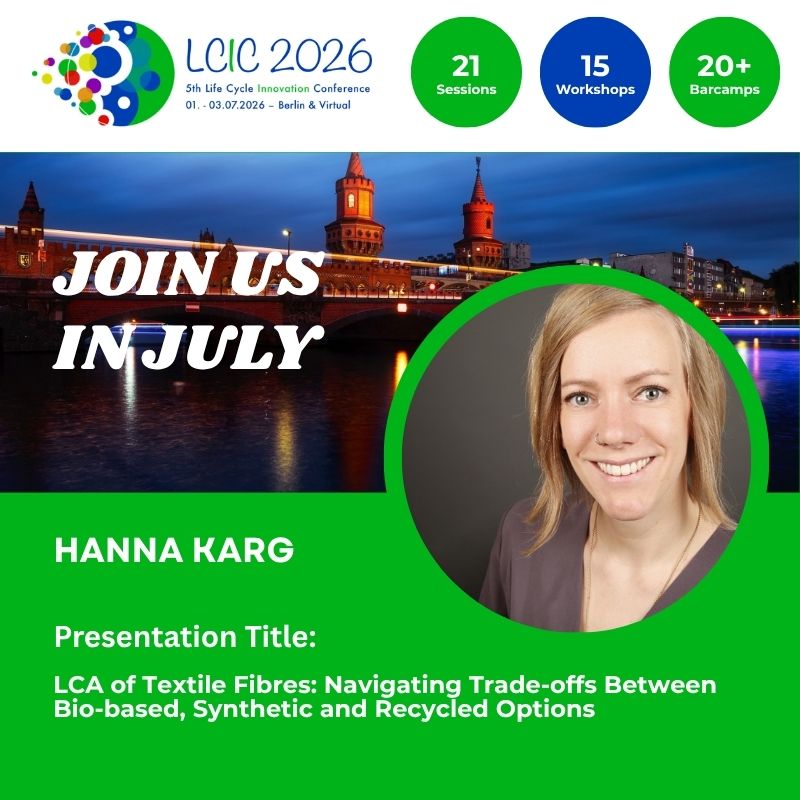
LCA of Textile Fibres: Navigating Trade-offs Between Bio-based, Synthetic and Recycled Options
The textile industry faces mounting pressure to reduce its environmental footprint, with fibre production representing a critical hotspot across multiple impact categories. While bio-based fibres (cotton, hemp, linen), man-made cellulosic fibres, and recycled alternatives are...

Life Cycle Assessment of CARBIOS enzymatic biorecycling technology: powering PET plastic and textile circularity
Polyethylene terephthalate (PET) is one of the most used polyester plastics in a broad range of applications. However, like other plastics, it is prone to leakage into the environment and post-consumer PET waste is not...
Life Cycle Assessment of Circular Native Potato Starch Produced from an Industry Co-Product
Native starches, widely used in food industry, are carbohydrates traditionally extracted from agricultural raw materials such as wheat and maize. Beyond these conventional production routes, native starch can also be produced from reclaimed starch —...
Life Cycle Assessment of different end-of-life scenarios for footwear
The circular economy is an approach that seeks to maximise value and minimise waste in the use of resources, by creating a closed cycle of production and consumption. In some industrial sectors such as fashion...

Life Cycle Assessment of Eastman’s Molecular Recycling Process: Methanolysis
Session 03: Life Cycle Innovation in the Chemical Sector
Eastman’s methanolysis technology is a type of material-to-material molecular recycling that enables a diverse variety of difficult-to-recycle waste polyesters to be unzipped (depolymerized) into their constituent monomers. Eastman commissioned Quantis to complete a cradle-to-gate life...
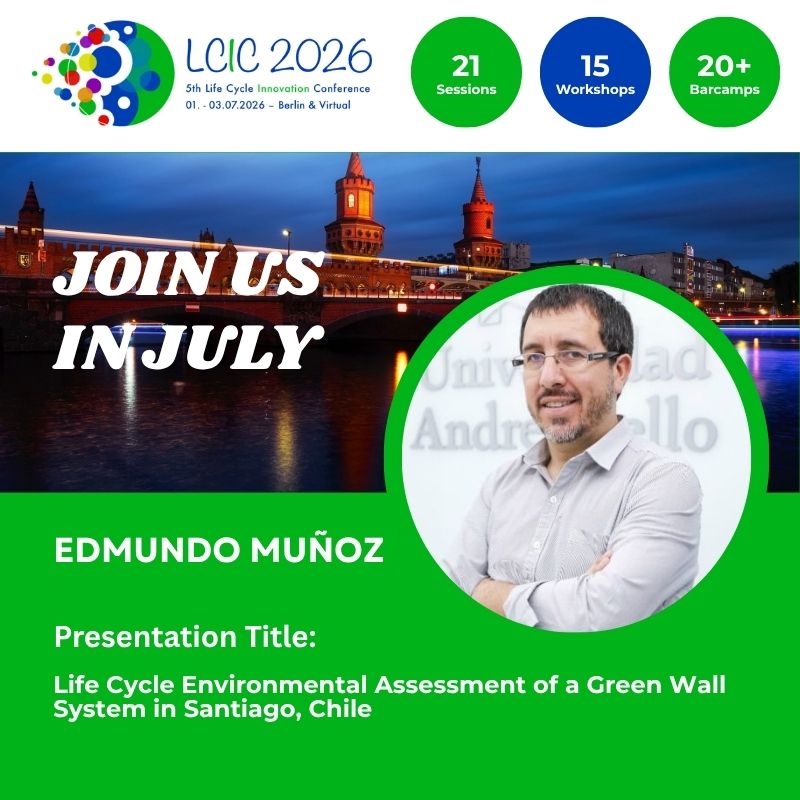
Life Cycle Environmental Assessment of a Green Wall System in Santiago, Chile
Urban heat islands, increasing cooling demand, and air pollution represent critical sustainability challenges for Latin American cities. In this context, nature-based solutions such as green walls have emerged as promising strategies to mitigate thermal stress...

Measuring the Circular economy of multi-layers plastic packaging
Session 16: Applying Systems Thinking to guide the transition towards a regenerative Circular Economy (2)
‘Zero waste program for Europe’ (European Commission, 2014) and ‘Closing the loop action plan for the Circular Economy’ (EC (European Commission), 2015) are two recent strategies in the European Union (EU) about transition towards a...
Proposal for a new look at the Business Model Canva to serve circular business models, a Literature Review.
The growing concern about the environmental impacts resulting from the linear economic model has driven the search for sustainable alternatives, highlighting the circular economy as a promising approach. However, the difficulty in implementing circular business...

Prospective life cycle analysis of German building stock
Purpose: Current life cycle assessment practice uses data gathered from existing or older data to project the evolution of environmental impacts over the period of fifty to one hundred years. The study develops a framework...

Prospective life cycle assessment of road infrastructure in the context of circular economy: advances, challenges, and opportunities
Session 09: Life Cycle Innovation in the Transport and Mobility Sector (1)
Road infrastructure is an integral building block of our society by provisioning essential services (e.g., movement of resources and commuting) and stimulating the socio-economic development of local communities. The deterioration of road infrastructure is a...

Get The Best LCIC Deal

Gold Sponsor

Silver Sponsor